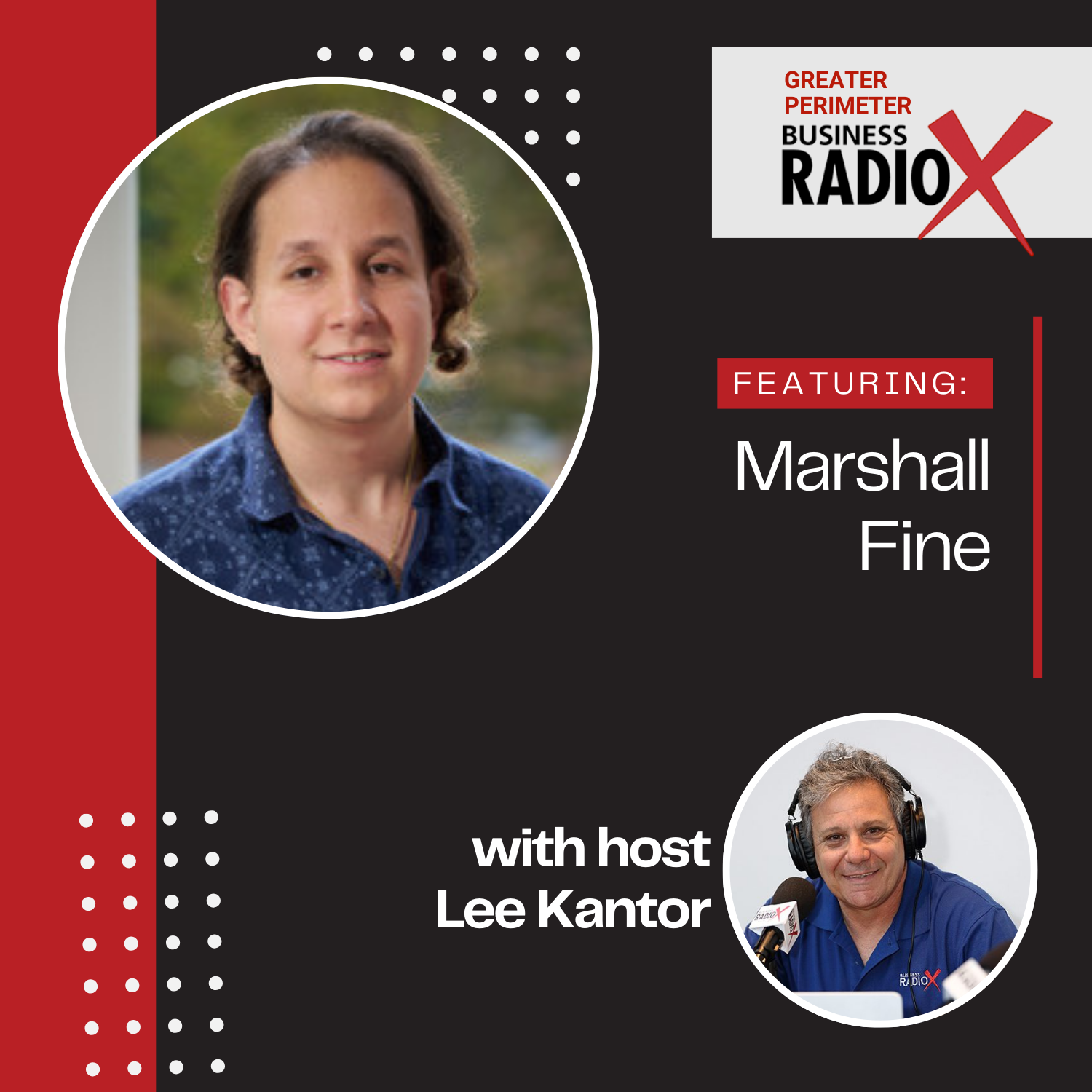

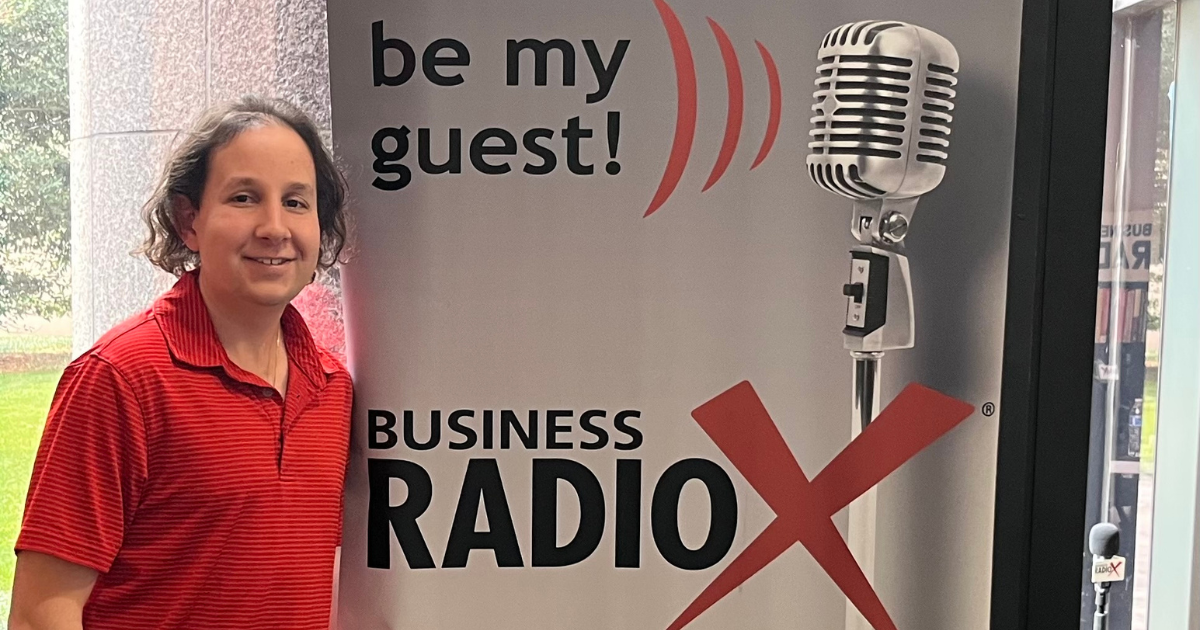
In this episode of Greater Perimeter Business Radio, Lee Kantor talks with Marshall Fine of MTY Productions, an Atlanta-based videography company. Marshall shares his journey from filming trains in high school to covering live events like improv shows and charity swims. He discusses his creative process, the use of drones, editing techniques, and the importance of repurposing content. Marshall also highlights his passion for storytelling, ongoing learning through networking, and his openness to both freelance and full-time opportunities in video production.
 Marshall Fine is a videographer, cinematographer, and editor based in the Atlanta area. With a lifelong passion for creativity and storytelling, Marshall has always been drawn to the art of bringing ideas to life through visual media.
He earned his Associate’s degree in Film and Video Production and continues to refine his craft through hands-on experience and diverse projects.
Through MTY Productions, Marshall offers comprehensive video services tailored to meet a wide range of creative needs. His work spans live event performances, event coverage, short films, documentaries, highlight reels, high-adventure documentation, and ceremonial productions. 
Dedicated to capturing compelling stories and delivering high-quality visuals, Marshall and his team are committed to turning clients’ visions into reality.
Connect with Marshall on LinkedIn, Facebook, Instagram and YouTube.
Episode Highlights
- Types of projects undertaken by MTY Productions
- Experience with live event coverage, including improv comedy and charity events
- Use of technology in videography, particularly drones
- Filming techniques and camera positioning strategies
- Editing processes and challenges with multi-camera footage
- Importance of repurposing content from various projects
- Distribution of videos on platforms like YouTube, Instagram, and Facebook
- Networking and continuous learning in the videography field
- Future aspirations for growth and potential full-time opportunities in videography or editing
 This transcript is machine transcribed by Sonix.
TRANSCRIPT
Intro: Broadcasting live from the Greater Perimeter. It’s time for Greater Perimeter Business Radio. Now, here’s your host.
Lee Kantor: Lee Kantor here. Another episode of Greater Perimeter Business Radio. And this is going to be a good one today on the show. We have videographer, cinematographer, editor with MTY Productions, Marshall Fine. Welcome.
Marshall Fine: Thank you. It’s great to be here.
Lee Kantor: Well, I’m excited to learn what you’re up to. Tell us about your company, how you serving folks?
Marshall Fine: Uh, yeah. So we are a Atlanta area production company and we, our main specialty is doing live event, live event coverage.
Lee Kantor: And so what got you interested in this kind of work?
Marshall Fine: Really what got me interested was just that I, you know, ever since I was little, I’ve always been I’ve always had a unique interest in how movies and videos and everything. I mean, just, you know, the, the overall everything that goes into it. And when I was in high school, I actually took video production and I just really enjoyed it. And, and I was kind of like, hey, you know what? That’s just, I like this. This is what I’m gonna do.
Lee Kantor: So do you remember the first thing you videoed?
Marshall Fine: Yeah. The, so the, the, the very first thing that I did was actually in high school. And to truthfully, actually the most of the stuff that I did in high school, I was actually an actor in. And, but when I, you know, using the stuff that I, that I had learned, my first thing that I did was actually just some train videos and my, the name of the company, uh, MTI productions actually is just kind of where it started. I’ve always, I’ve always loved trains. And when I started doing this in high school, I kind of didn’t really realize it was going to become a career thing. I was like, oh, I’m just going to make train videos. And that was kind of where that started. And it just became kind of fun and catchy. And I was like, you know what? I’m going to stick with this name and, you know, and run with it.
Lee Kantor: So now do you remember the first time someone said, I’ll pay you to make a video?
Marshall Fine: I don’t know.
Lee Kantor: Were you getting paid to do like what types of videos have you been working on?
Marshall Fine: So the, the main types of stuff that I’ve been working on is, is live is live event.
Lee Kantor: Like what’s an example? Like a, what’s a live event, a wedding or a concert or.
Marshall Fine: Yeah. So no, actually a live event is more of like a improv comedy show that I’m a cinematographer for. I did, I did a production in September up on Lake Lanier for a great organization called Swim Across America. And I, he, you know, it was a live event that went on on the lake, had a couple different cameras running and a drone running and capture the entire event and created a whole story out of it. It was myself, as well as a crew of a couple other guys, and we worked together to produce this.
Lee Kantor: So now there’s a lot of new technology coming out is drones. That’s is that fun to work with?
Marshall Fine: Drones. Drones are a lot of fun, are a lot of fun to work with.
Lee Kantor: So what’s kind of some of the things you learned about using drones?
Marshall Fine: Um, it’s, there’s definitely a trick to learning how to fly. Um, try not to fly into, into a tree. Yeah. That’s more importantly, not getting well, I guess more importantly, not getting stuck in them, but also not, um, flying into them is, is a, is a hard thing and trying to figure out, you know, okay, where’s the wind? And like, um, I learned the hard way that flying, trying to take off from a rock on the side of a river bank or a bank in a, on a lake. Not the hottest idea.
Lee Kantor: But it captures great footage though, right?
Marshall Fine: Yeah, yeah. Oh, no. It absolutely does. Absolutely does.
Lee Kantor: So now when you’re working at kind of a theater and you’re working with those kind of people, how do you know where to position the cameras? Are they in a static place or do you have some static and some moving around.
Marshall Fine: Depending on the, on the production? The that’s it’s kind of it’s run very run and gun. Um, and that’s actually tends to be my more of my style, but, um, but depending on the production, there’s sometimes it is, you know, you’re shooting whatever’s there. Um, other times there’s like the event, like the event I did in September, there is a set schedule of the day of the day and making sure that you’re there at that moment to get that footage, to get that and get that captured. Because once it happens, that’s it.
Lee Kantor: Right.
Marshall Fine: And, um, and stuff. But so some it depends on, it definitely depends on the, on the production.
Lee Kantor: So now your work also extends into the editing side as well. So you capture all of the visuals, and then you have to go back and kind of make sense of all of from the different cameras and to make them tell a story. Right?
Marshall Fine: Yes, yes, absolutely. Yes. It’s, it’s, um, that becomes an interesting and interesting thing to do. Um, the, sometimes I end up creating my own confusion, um, because you get, you know, have, you know, sometimes you have just one camera or you have a bunch of different data that you’re building stuff from, um, or multiple projects you’re pulling stuff from. So yeah, it’s, um, I did a production this past summer. Um, the, I was traveling with an organization and doing video and we had, I had done video at all three at all three conferences. And then I built a, also built a documentary, um, covering all three conferences. So I was literally like using the footage from each, from each camp to build from each conference, to build that video and then building the actual documentary using the footage from all of them.
Lee Kantor: Right? The same. So that’s a great lesson for the listeners about repurposing content. Just because you filmed something one time doesn’t mean that’s the end of it. You can use it in a variety of ways.
Marshall Fine: Yes, yes, absolutely. And that’s actually one of the interesting things about doing like a demo reel that I’m actually currently working on a new demo reel where the, where I’m, I’m building it based off of all these different projects. And some of them I have, you know, the, I have the mastered the mastered video, the mastered video file, and then others, I’m using the raw footage from that project kind of learning, learning a little bit on my own, even as I’m, as I’m doing it and like, oh, this didn’t work. Okay, now let’s try this.
Lee Kantor: Right. So now, um, when you create some of the content or are your clients or yourself using kind of YouTube like, where’s your main distribution channel for that?
Marshall Fine: Yeah, so I am, I am fully on YouTube. Um, the, I am on YouTube and Instagram and Facebook. Um, follow, um, follow and subscribe at MTV productions, Instagram MTY productions 15. Um, so the, all of my videos go to go to YouTube. Anything that I do for a client also goes to go to the client, of course. Um, but then also will go on to the, my YouTube page because then I can be able to say show and say, hey, here’s what I, here’s what I’ve done right now.
Lee Kantor: Do you, um, do you remember the first time that maybe your client saw your work and how they reacted?
Marshall Fine: Uh, yes, I, I think that I wouldn’t, I don’t know that I necessarily know the first time, right.
Lee Kantor: But what’s the time that you remember that you were super proud.
Marshall Fine: The. I think that one of the moments that I was super proud of that it was actually the shoot I did in September. Um, it was a friend of mine that, that had hired me for that, for this production. But she was, she was just like, she’d reached out to me and was like, you know, I, hey, I really like the stuff that you’re doing. Like were you will you come in? Will you come and do this? And I was like, yeah, let’s do this.
Lee Kantor: Like, let’s make it happen.
Marshall Fine: Yeah, let’s make it happen. And it’s, um, and as we started talking, it was, I was kind of like, oh, wait, this is more of a production than I had to do myself. Like I need.
Lee Kantor: I need extra people.
Marshall Fine: Yeah. So I had a, I have a, I have a great friend that, um, that’s also in the, in the industry that I reached out to and I was like, hey, this is the project I’m working on. Are you interested in coming to help? And he was like, yeah, let’s do it. And I’m like, cool.
Lee Kantor: So now you have a team?
Marshall Fine: Uh, yeah. So I mean, it definitely depends on the, on the project. I, I like, I like working on a team and I very much enjoy that. Um, the, it just, it depends on, it depends on the project that I work on.
Lee Kantor: Right? So you have people in resources. If you need more, you have some people to call and some of the time you can do it yourself or just maybe with 1 or 2 other people.
Marshall Fine: Yes.
Lee Kantor: And the same with the editing. Or do you primarily do the editing yourself?
Marshall Fine: I primarily do my own. Do my own. I primarily do my own editing.
Lee Kantor: Mhm. So what, um, how would you like to see the company keep progressing? What, what types of clients would you like to be working with more.
Marshall Fine: Um, to progress more and all that. What I would like to be able to do is more of being able to get more, being able to get more clientele and, um, trying to, trying to build that and trying to improve, improve and grow my skills. Um, but also trying to find a somewhat of a stable job, like somewhat of a stable.
Lee Kantor: You would be open to working for an organization that maybe needed a videographer and editor.
Marshall Fine: Yes. Yes. No. My primarily this is I mean, I’m just trying this is freelancing, right? And I, and I love I love doing it, but also wanting to be able to do this as a full time career and trying but trying. My goal is to try to find something where I am doing this truly, truly full time. And I’m freelancing and getting to getting to learn, learn and play and learn and play and getting, getting, getting experience overall.
Lee Kantor: And a lot of the ways you’re learning is by going on YouTube and watching videos and just talking to other experts that have been doing this for a while.
Marshall Fine: A little bit. Um, a lot of the way that I’m learning about things is going out to like film mixers and film mixers. Um, I do a little bit of, a little bit of going on to, on to YouTube and like trying to figure something out if I can’t figure it out on my own. Um, my friend, I actually reached out to him a couple weeks ago and I was like, hey, can you kind of teach me how to do a couple of things with editing. And I didn’t have anything specific, but just trying to understand more. Yeah, exactly, I understand more. Um, a lot of things that one of the things that I’ve always been told is that I, and feedback that I’ve always gotten is that I have an eye for things. Um, so like for me, when I shoot, I tend to kind of always think about the, think about the story and the event and all that. Okay, how am I gonna, how am I going to carry from one thing to the other and kind of using the camera to make those, to make that transition and can kind of help conceive what, uh, whatever message is trying to, trying to be pushed out.
Lee Kantor: Now, you mentioned some of the mixers. Are those here locally in town? Are there some of your do you go to some of the ones locally?
Marshall Fine: Uh, yeah, some of them are, some of them are local. Some of them are kind of in kind of like that Downtown Atlanta area, right?
Lee Kantor: Is there a favorite mixer or favorite group that you’re a member of?
Marshall Fine: Um, I would say my, my favorite one is, um, burgers, burgers and brew. Um, it was a, it’s a Facebook group and the guy that runs it, um, he’s, he’s great. And um, I’ve been to that one a lot. I, um, I’ve never gotten any jobs out of it, but I’ve met a lot of great people and had some nice conversations and that kind of, and that kind of thing. And, uh, yeah.
Lee Kantor: And so as you progress, you’re looking for a full time job as a videographer editor somewhere. That’d be great if they hired you or if some association or theater or somebody called you up and said, hey, I need a videographer and editor for this project. You’d be open to that conversation too.
Marshall Fine: Yes, absolutely.
Lee Kantor: And you mentioned some of the the ways to reach you. Can you tell them one more time before we wrap up? It’s on YouTube. Is your main kind of portfolio?
Marshall Fine: Yes, YouTube is my main kind of portfolio. My, um, everything that I post on YouTube is also on my is on our Facebook page. Um, MTV productions on Facebook. And then our Instagram. Mti productions 15 we kind of post all of our behind the scenes. Um, anything that, any project that we finish is the link is posted out onto Instagram along with kind of just pictures of, hey, here’s things that went on throughout the, throughout the shoot so that you can kind of see kind of a.
Lee Kantor: Behind the scenes.
Marshall Fine: Yeah. Kind of exactly. Yeah. Kind of a behind the scenes of what should be kind of expected and, and that kind of thing.
Lee Kantor: Well, Marshall, thank you so much for sharing your story today. You’re doing such important work and we appreciate you.
Marshall Fine: Well, thank you for having me. I really enjoy it.
Lee Kantor: All right. This is Lee Kantor. We’ll see you all next time on Greater Perimeter. Business RadioX.














